
Why Most Hyper-Casual Prototypes Fail in the First Ten Seconds
Ten seconds decides most prototype tests. Here are the three failures that account for nearly all of them, and a cheap way to check your opening before you buy a single install.
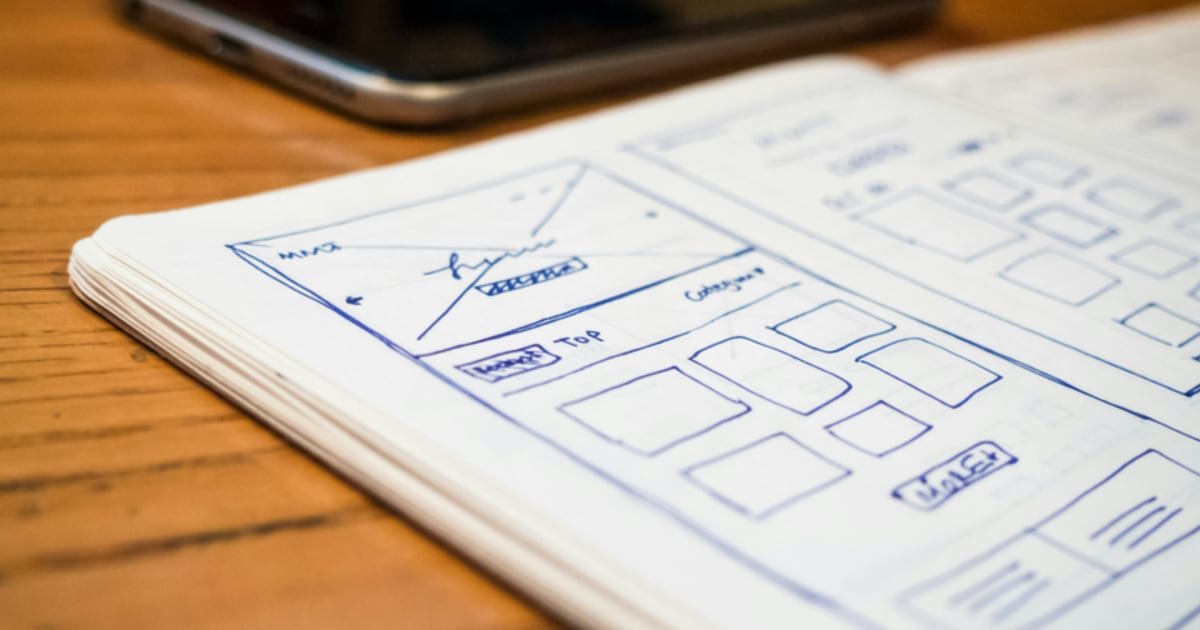
The first ten seconds must do three things: make the goal obvious without words, make the first action satisfying, and deliver what the advert promised. Missing any one of them loses the player before the game has shown anything. Nearly every failed prototype test traces back to one of the three.
Why this matters
A paid test buys attention for a few seconds. Whatever happens in that window determines the numbers you use to judge the whole concept.
That means a good mechanic with a bad opening tests as a bad mechanic. You get a number that says no, and it is answering a question about the first ten seconds rather than about the game.
Fixing the opening is usually a day of work. Rebuilding a concept because you misread the result is considerably more.
What the first ten seconds must do
Three jobs, in this order.
- Establish the goal. The player should be able to say what they are trying to do without being told.
- Deliver a satisfying action. The first interaction should feel good on its own, before any progress exists.
- Match the promise. What the advert showed should be visible and reachable immediately.
Everything else is optional this early. Story, progression, upgrades, and settings can all wait.
A new player is not deciding whether your game is good. They are deciding whether it is worth another ten seconds.
Failure one: the player does not know what to do
The most common failure, and the easiest to miss internally because everyone on the team already knows the rules.
It shows up as hesitation. The player taps somewhere neutral, waits, or drags experimentally.
Common causes:
- The goal is off screen or only visible after scrolling.
- The interactive element does not look interactive, particularly with flat art.
- Too much is on screen at once, so nothing reads as the subject.
- A text tutorial carries the explanation, and it is skipped or unread.
The fixes are visual rather than verbal. Make the target the brightest, largest, most contrasted thing on screen. Animate it. Remove everything that competes with it.
If a mechanic genuinely cannot be understood without instruction, that is a finding about the mechanic, not about the tutorial.
Failure two: the first action is not satisfying
The player understands the goal, performs the action, and nothing much happens.
This is a feel problem and it is entirely solvable. The first action carries more weight than any later one because it sets the expectation for all of them.
Check four things.
- Response time. Any delay between touch and reaction reads as broken.
- Feedback volume. Sound, animation, and a visible consequence should all fire.
- Consequence clarity. Something must visibly change as a result.
- Repeatability. The player should immediately want to do it again.
The approach is in Why Juice Sells, and for the opening specifically it is worth spending disproportionate effort on the very first interaction.
Failure three: the promise of the ad is missing
The player installed because of something specific and it is not there.
This is the most expensive failure because the install was paid for. It also corrupts your read of the test, since these players churn for reasons unrelated to the game's quality.
It happens in three ways.
| Cause | What the player sees |
|---|---|
| The advert showed a later stage | An easier, plainer version of what they came for |
| The advert showed a different mechanic | Something recognisably not the same game |
| The promised moment is gated | A loading screen, menu, or tutorial in front of it |
The third is the most common and the easiest to fix. If the advertised moment exists at level five, put a version of it in level one.
The wider question of how far a creative can travel from the game is in Three Ad Creatives That Beat the Game.
How to test the first ten seconds cheaply
You do not need paid traffic to find these problems.
- The silent video test. Record ten seconds of play and show it to someone unfamiliar with the game. Ask what the goal is. If they cannot say, fix that first.
- The cold hands test. Hand the phone to someone with no introduction and say nothing at all. Watch their thumb, not their face.
- The first-action timer. Measure how long until the first meaningful action. If it is more than a few seconds, cut whatever sits in front of it.
- The advert match test. Play your creative, then immediately open the game. The gap between them is what a paid player experiences.
Five people is enough to find every problem in this list. This is the cheapest testing in game development and the most skipped.
What we would do
Build the opening last but test it first. Once the loop works, spend a day on the first ten seconds before spending anything on traffic.
Cut everything between launch and the first action. No splash sequence, no menu, no consent wall in front of play where the platform allows it. Let the game start playing itself if necessary, so the player arrives mid-action rather than at a title screen.
Then run the cold hands test with five people who have never seen it. If three hesitate at the same moment, that moment is the finding, and it is nearly always fixable in an afternoon.
The short version
- Ten seconds must establish the goal, satisfy the first action, and match the advert.
- Hesitation means the goal is unclear, and the fix is visual rather than written.
- The first interaction deserves disproportionate feel work.
- A gated advertised moment is the most common and most fixable promise failure.
- Silent video, cold hands, and a first-action timer find these without paid traffic.
- Five testers is enough to surface every problem on this list.
Record ten silent seconds and show it to five people before your next test. If the answers surprise you and you want help fixing the opening, get in touch.
Related reading: What Happens in the First 30 Seconds of a Top-10 Casual Game, Stop Polishing, and What Voodoo Actually Looks For.
Got a game idea? We build it.
You bring the concept. We design, build, test and launch it, and you own 100% of the finished game.
Share Your Game Idea →Keep reading
 Design
Procedural Level Generation on a Solo Schedule
Procedural generation promises infinite content, but a solo dev needs a version that ships. Here is how to scope it, bu…
 Design
Adding Accessibility Without Doubling the Work
Accessibility does not have to mean a second round of development. Five changes, built into the process from the start,…
 Design
How to Make a Prototype Look Polished With Minimal Art
A prototype does not need final art to look polished. Color, spacing, animation timing, and a few visual shortcuts can…